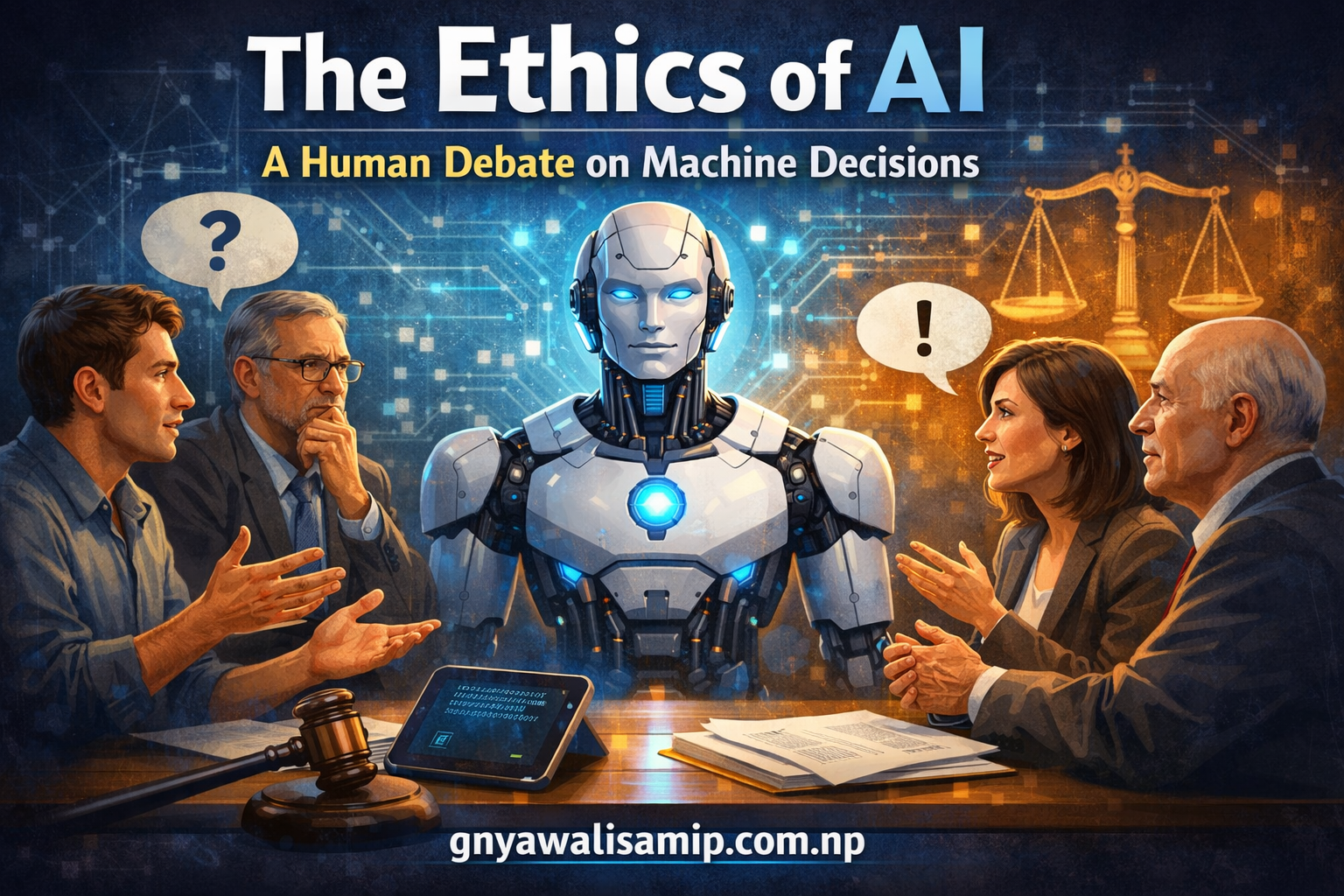
The Ethics of AI: A Human Debate on Machine Decisions
The Ethics of AI: A Human Debate on Machine Decisions
Artificial intelligence is no longer a futuristic concept. From suggesting what movie to watch to helping companies screen job applicants, AI is now a regular part of our daily lives, influencing important choices. But as machines become more involved in making or assisting with decisions, a host of difficult questions arises: Are these systems trustworthy? Can we be sure they are fair? And if something goes wrong, who is truly responsible?
These are the fundamental questions at the core of AI ethics. While AI can bring undeniable benefits like speed, efficiency, and consistency, it also carries serious risks, including bias, a lack of clarity, and threats to our privacy. The discussion isn’t about whether we should use AI, but rather how we can deploy it responsibly in decision-making processes. This article will explore the ethical implications of AI by looking at transparency, fairness, accountability, and governance, as well as the wider risks.
Transparency and the “Black Box” Issue
One of the biggest ethical hurdles with AI is its lack of transparency. Many of the most advanced algorithms, particularly deep learning models, act as what we call “black boxes.” They deliver a result without being able to clearly explain the steps they took to get there.
- The Black Box Problem: For instance, an AI might approve a loan application but can’t easily tell a human what specific factors led to that decision. This creates major issues for both fairness and accountability.
- Explainable AI (XAI): Researchers are working on explainable AI to make these processes more understandable. If an AI can explain its reasoning in simple terms, people can both trust its decisions and challenge them when necessary.
- Why It’s Critical: Without clear transparency, it’s nearly impossible to confirm that a system is fair or to hold anyone responsible for its mistakes. In high-stakes fields like healthcare, finance, or criminal justice, transparency isn’t just a technical feature—it’s an ethical must.
Bias, Fairness, and Algorithmic Discrimination
AI systems learn from the data they’re trained on. If that data contains existing human biases, the AI will likely adopt and even magnify them.
- Real-World Examples: It’s been found that some hiring algorithms have favored male candidates over female candidates because they were trained on historical hiring data that was already imbalanced. Similarly, certain facial recognition systems have struggled to accurately identify people of color.
- Algorithmic Bias: Bias can sneak in through flawed training data, poor design choices, or even the context in which the AI is used.
- Solutions for Fairness: To combat this, we can use more diverse datasets, conduct regular fairness audits, and adopt inclusive design practices from the very beginning.
The ethical conclusion is simple: AI should not be a tool that reinforces discrimination. Instead, it should be designed to promote fairness and equality.
Accountability: Who Takes the Blame?
When an AI system makes a bad call, who is on the hook? Is it the developer, the company that used the AI, or the AI itself?
- The Core Dilemma: Imagine an AI in a hospital misdiagnoses a patient. Who is at fault? Is it the hospital, the software company, or the AI’s algorithm?
- Algorithmic Accountability: Ethical frameworks suggest that responsibility must always remain with humans. AI is a tool, and the people who create and deploy it should be held accountable for the outcomes.
- Auditing and Oversight: We need clear lines of responsibility and independent audits to ensure true accountability.
Without a solid framework for accountability, public trust in AI decision-making will quickly fall apart.
Human Autonomy and Oversight
A key principle in AI ethics is that these systems should assist people, not completely replace them. The debate emphasizes keeping humans in control.
- Human-in-the-Loop (HITL): This approach ensures a human is always involved in reviewing critical AI decisions. For example, a judge might review an AI’s risk assessment report but still make the final judgment call themselves.
- Risk of Over-Reliance: If we trust AI systems too much, we risk giving up our own critical thinking and control. Proper oversight ensures that humans remain the ultimate decision-makers.
The goal is to find a good balance where AI supports our decisions without ever dominating them. This is how we keep technology aligned with human values and freedoms.
Privacy, Data, and Consent
Since AI relies so heavily on data often personal data it raises serious concerns about privacy and consent.
- Data Collection: AI systems collect information from our browsing habits, social media, and even our health records. Without proper consent, this becomes a major invasion of privacy.
- Challenges with Consent: Many users don’t truly understand how their data is being used, which makes getting genuine, informed consent difficult.
- Regulations: Regulations like Europe’s GDPR require greater transparency and place limits on how data can be used, but challenges persist.
Protecting privacy is a fundamental ethical principle. AI must be developed in ways that respect individual rights and personal freedoms.
Ethical Governance and Global Standards
AI is a global technology, so its ethical challenges transcend national borders. This is why governance and international standards are so important.
- UNESCO’s Recommendation: In 2021, UNESCO introduced its Recommendation on the Ethics of Artificial Intelligence, which was adopted by nearly 200 countries. It lays out principles like fairness, transparency, and sustainability.
- Corporate Responsibility: While many tech companies have published their own AI ethics guidelines, critics argue that self-regulation isn’t enough.
- The Need for Law: Governments must create enforceable laws to ensure ethical AI use while still encouraging innovation.
Global cooperation is absolutely essential. Without it, ethical practices could differ from country to country, leaving dangerous gaps in accountability.
Broader Risks to Society and the Environment
The impact of AI goes beyond individual decisions. It poses broader risks to society and the environment.
- Autonomous Weapons: The use of AI in military decisions raises life-and-death ethical questions.
- Job Displacement: Automation driven by AI could displace millions of jobs, bringing up major questions about economic fairness.
- Environmental Footprint: Training large AI models uses huge amounts of electricity, which contributes to carbon emissions.
These broader issues remind us that the ethics of AI extend far beyond fairness and transparency; they will ultimately shape the future of our society itself.
FAQs
What is the “black box” problem in AI?
It’s when AI’s decisions can’t be explained to humans, making the outcomes difficult to trust or challenge.
Why does AI bias matter?
AI bias can result in unfair or discriminatory outcomes, negatively affecting groups based on their race, gender, or background.
Who is accountable when an AI makes a mistake?
Ultimately, humans the developers, the companies, and the users must be held accountable, as the AI system is just a tool.
Can AI decisions be explained?
Yes. Explainable AI (XAI) is a field dedicated to making AI’s reasoning clear and understandable.
Are there global ethics guidelines for AI?
Yes. Organizations like UNESCO have created international principles to guide the ethical use of AI.
Leave a Reply